

Introdução
Nesta lição, você aprenderá a usar o algoritmo de divisão com números grandes.
Anteriormente, você aprendeu como fazer uma divisão longa ao dividir por um número de um dígito ou divisor. Você usa os mesmos passos de divisão quando o número que está sendo dividido (o divisor) tem vários dígitos.
Este vídeo ilustra o material da lição abaixo. Assistir ao vídeo é opcional.
Praticando a Divisão Longa com Dois Dígitos
Este exemplo demonstra como usar o algoritmo de divisão com números grandes. Use os passos da divisão:
- Coloque o número que está sendo dividido (o dividendo) abaixo da caixa e o outro número (o divisor) à esquerda da caixa.
- Começando pela esquerda, determine quantas vezes o divisor pode caber no primeiro dígito do dividendo.
- Escreva esse número acima do dígito e subtraia o produto desse número e o divisor do dividendo.
- Repita os passos 2 e 3, indo para a direita.
Exemplo 1
\(5986\div82\)
Comece desenhando o símbolo de divisão. Coloque 5986 abaixo dele e 82 à esquerda do símbolo:
\begin {align*}82\enclose{longdiv}{5986}\end {align*}
Começando pela esquerda, observe o primeiro valor no dividendo, ou seja, o número que está sendo dividido. Neste caso, 5. Quantas vezes o 82 cabe no 5? A resposta é zero. Como é zero, passe para o próximo número. Quantas vezes 82 cabe em 59? De novo, a resposta é zero. Ande outro dígito para a direita. Quantas vezes 82 cabe em 598?
Com problemas como esses, nem sempre é fácil saber a resposta. Talvez você precise adivinhar ou estimar. Comece com 7. \(82\times7=574\). 574 é próximo de 598, mas ainda é menor que 598. O 7 ficará acima do 8 porque é o último dígito que usamos até agora.
Subtraia, \(598-574=24\). Anote o número na próxima coluna à direita, que é 6. Agora você está trabalhando com 246.

Figura 1
Quantas vezes 82 cabe em 246?
Para te ajudar a adivinhar, você pode pensar neste problema em termos dos fatos da multiplicação que você conhece. Se considerarmos apenas a coluna das dezenas do divisor por um momento, neste caso 8, e os dois primeiros dígitos do dividendo, podemos reconhecer que 8 cabe em 24. \(8\times3=24\).
Comece com 3. \(82\times3=246\). O 3 ficará acima do 6 porque é o último dígito que usamos até agora. Subtraia 246.

Figura 2
Como a resposta é 0, isso significa que não há sobras ou partes restantes. A resposta correta é 73.
Lembre-se: Não tem problema adivinhar e ter que apagar enquanto trabalha neste processo. Com mais prática, você ficará melhor e trabalhará mais rápido. Também será mais fácil e rápido se você memorizar os fatos da multiplicação, então continue trabalhando neles!
Lembre-se
- Certifique-se de anotar os números dos valores posicionais restantes ao completar a equação de divisão.
- Memorizar os fatos da multiplicação facilitará a divisão.
- A divisão pode envolver muita tentativa e erro. Não tem problema se você precisar de algumas tentativas para descobrir qual número faz parte da resposta correta.
Problemas Práticos
- \(152 \div 8 = ?\) (
Detalhes:
Para determinar quantas vezes 8 cabe em 1 152, primeiro observe o 1 em 152. Você não pode fazer 8 com 1, ou, em outras palavras, não há partes suficientes em 1 para se ter um conjunto de 8. Em seguida, observe os dígitos 1 e 5 juntos e pergunte-se quantas vezes 8 caberia em 15, ou quantos conjuntos de 8 você consegue obter com 15 peças? A resposta é 1 vez ou 1 conjunto de 8.
Coloque o 1 no local de resposta acima do 5.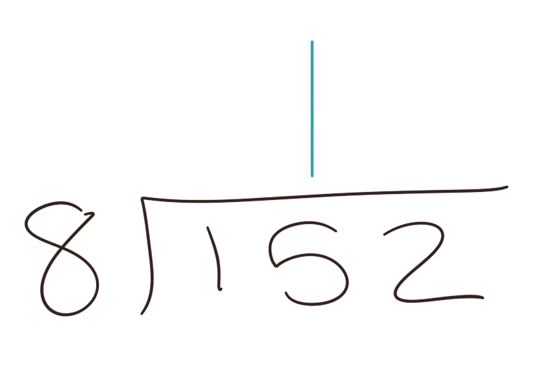
Em seguida, multiplique \(8 \times 1\) e coloque a solução de 8 abaixo do 5. Coloque o 8 abaixo do 15 e subtraia \(15 − 8\). O resto dá 7. Coloque o 7 abaixo do 5 e do 8.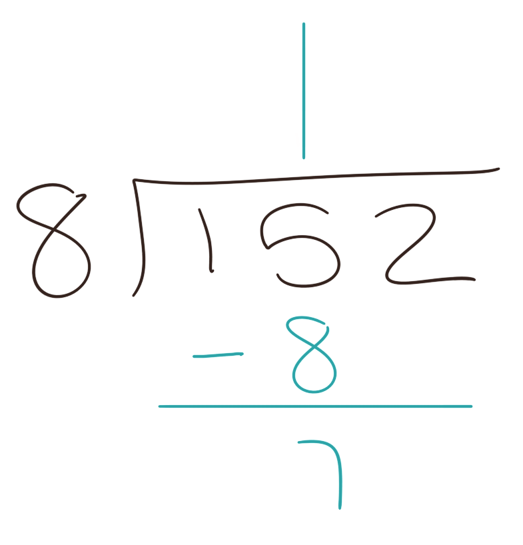
O próximo passo é descer o 2 em 152 e colocá-lo ao lado do 7 no resto. Agora, há 72 nesta área.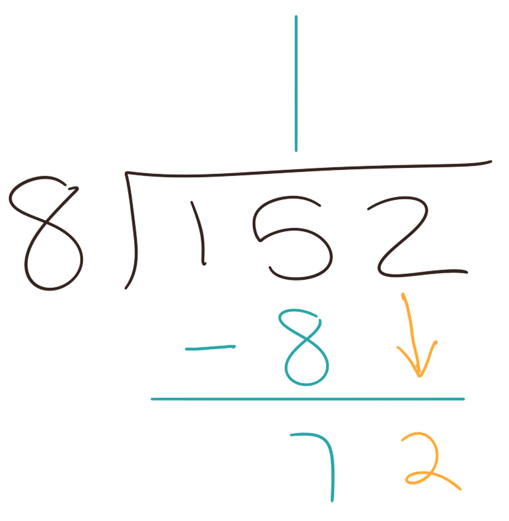
Você ainda está dividindo o problema original, mas está fazendo isso em partes.
O próximo passo é determinar quantas vezes o 8 cabe no 72, e a resposta é 9 porque \(8 \times 9 = 72\).
Coloque o 9 na área de resposta acima do 2 em 152.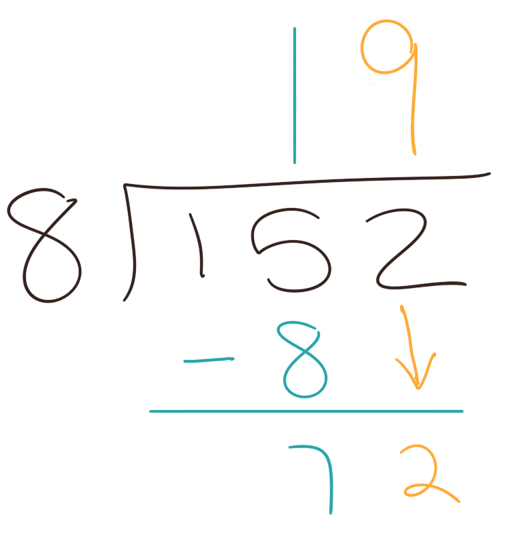
Como \(8 \times 9\) é 72, coloque o 72 abaixo do 72 e subtraia. Restam 0. Você pode parar de dividir quando chegar a um 0.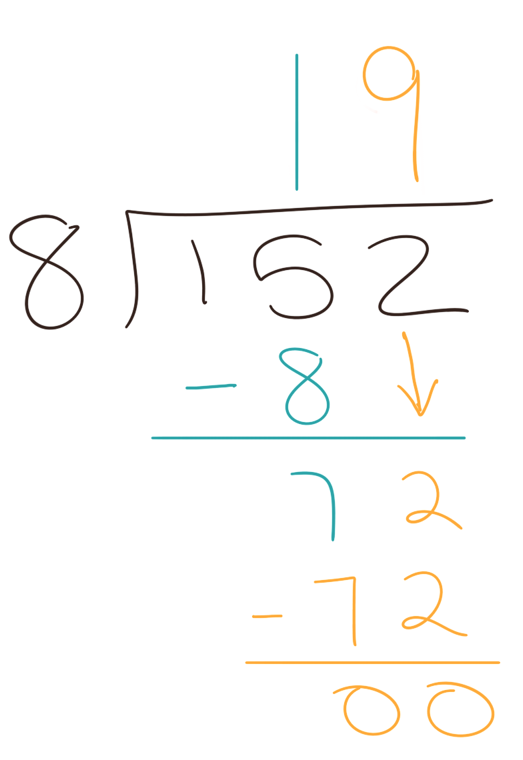
A resposta para 152 dividido por 8 é 19.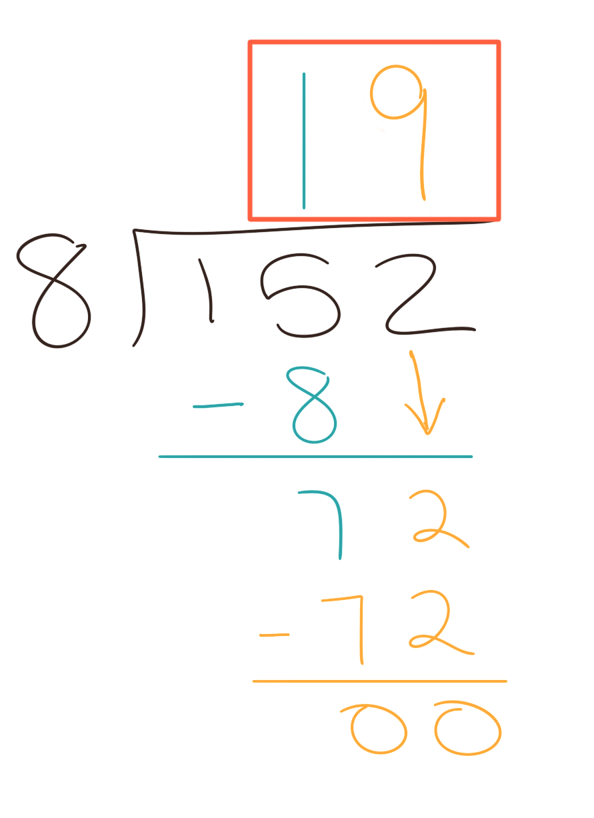
- \(1620 \div 20 = ?\) (
Solução:
Para determinar quantas vezes 20 cabe em 1620, primeiro teste o 1. Não há conjuntos de 20 em 1. Em seguida, observe os dígitos 1 e 6 e pergunte-se quantas vezes 20 caberia em 16? Novamente, há zero conjuntos de 20 em 16, então ele entra em 16 zero vezes. Em seguida, observe os dígitos 1, 6 e 2 juntos e pergunte-se quantas vezes 20 caberia em 162? A resposta é \({\color{Red}{\text{aproximadamente }} 8 {\text{ times}}}\).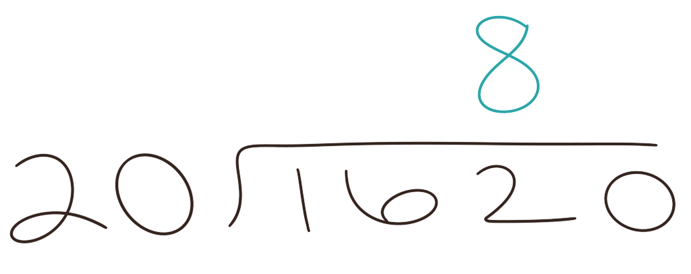
Multiplique \(8 \times 20\) para descobrir que é igual a 160. Coloque o 160 abaixo do 162 e subtraia. Há um resto de 2.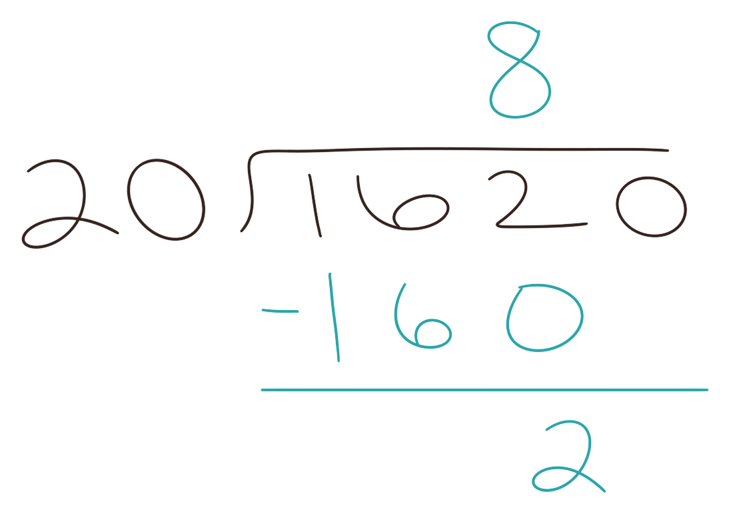
Agora, desça o 0 para formar 20.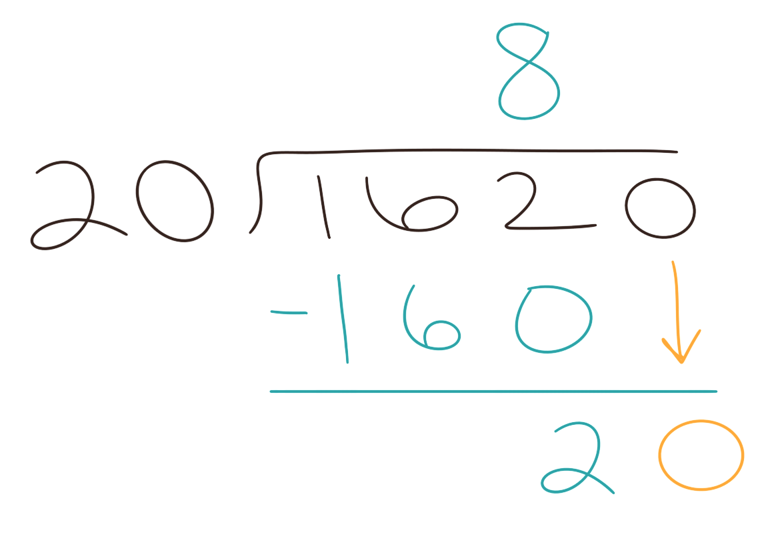
Repita o processo novamente, perguntando-se quantas vezes 20 cabe em 20. A resposta é \({\color{Red}1 {\text{ vez}}}\). Você sabe que \(20 \times 1 = 20\). Coloque o 1 no local da resposta acima do 0 em 1620 e multiplique \(1 \times 20 = 20\). Coloque o 20 abaixo dos outros 20 e subtraia. Sobrou 0, e não há outros dígitos para descer, então você pode interromper o processo de divisão.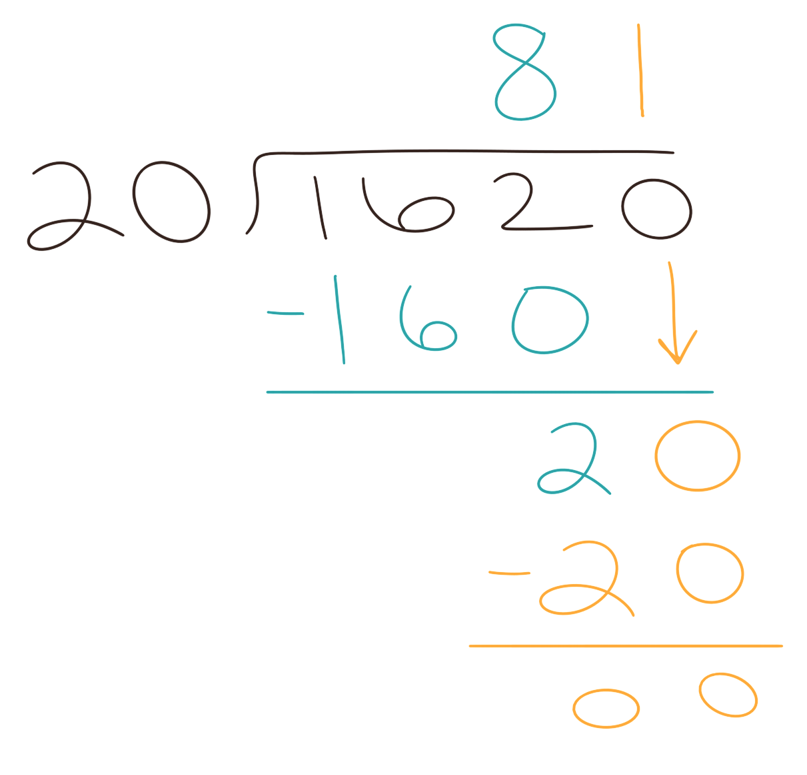
A resposta para a pergunta original de quantas vezes 20 cabe em 1620 é \({\color{Red}81 {\text{ vezes}}}\).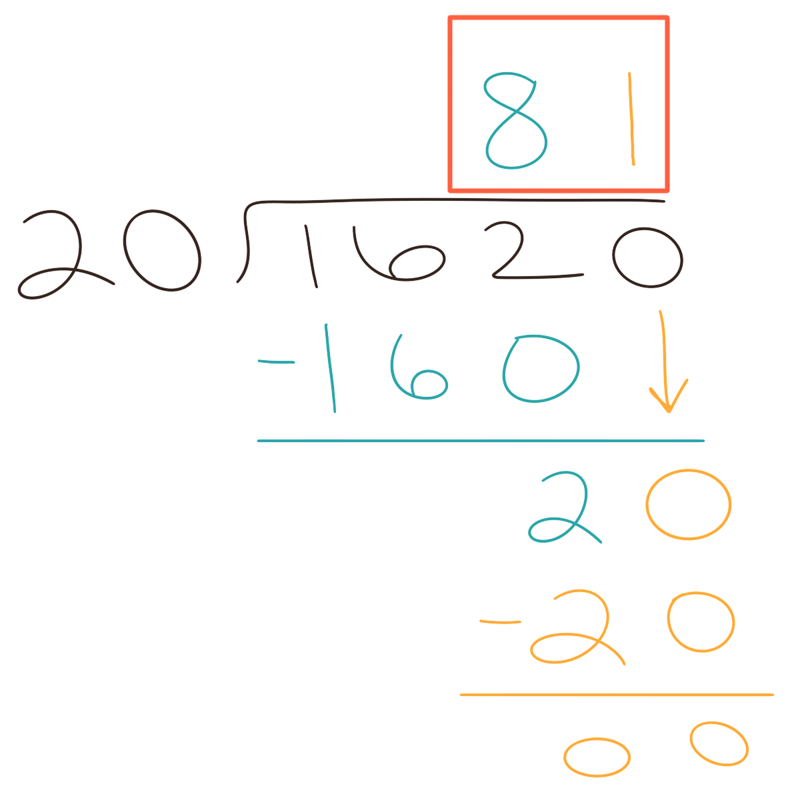
- \(2349 \div 87 = ?\) (
- \(3003 \div 39 = ?\) (
- \(14363 \div 53 = ?\) (
- \(45696 \div 64 = ?\) (