Back
Multiplicação com Números Decimais
> ... Matemática > Multiplicação e Divisão > Multiplicação com Números Decimais

Introdução

Nesta lição, você aprenderá sobre multiplicação com números decimais. A multiplicação com números decimais adiciona apenas um passo ao processo de multiplicação que você faz com números inteiros positivos ou números naturais grandes.

Embora você sempre possa usar uma calculadora para fazer multiplicações com vários dígitos ou com números decimais, é importante saber como fazer isso. Praticar fortalece seu cérebro e te prepara para as próximas lições.


Esses vídeos ilustram o material da lição abaixo. Assistir aos vídeos é opcional.


Passos da Multiplicação com Números Decimais

  1. Quando um decimal estiver presente, ignore-o primeiro e siga os passos para multiplicar números normalmente.
  2. Conte as casas decimais dos números que você está multiplicando.
  3. Defina o número decimal com mais casas decimais na resposta, contando da direita para a esquerda.

Exemplo 1

Resolva \(1.4\times3\)

Comece multiplicando os números como de costume e ignore o decimal.

The equation shows 1.4 x 3 = 42, with a smaller number 1 above the number 1.

Figura 1

Conte as casas decimais em cada número que você está multiplicando. O número 1.4 tem uma casa decimal.

The image shows 1.4 x 3 = 42, with an arrow above the dot, pointing to a space on the right of number 4.

Figura 2

O decimal na resposta irá uma casa para a esquerda, pois há apenas uma casa decimal.
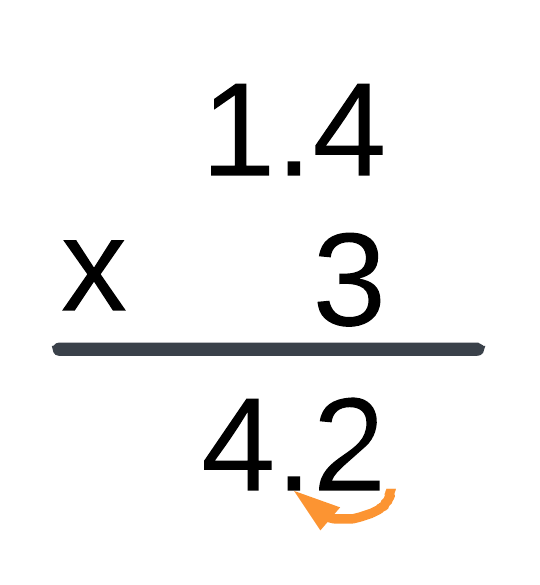
The image shows 1.4 x 3 = 4.2, with an arrow under the number 2, pointing from a space on the right of number 2 to the dot in between numbers 4 and 2.

Figura 3

Exemplo 2

\(3.89\times2.7\)

Primeiro, siga os passos da multiplicação e ignore as casas decimais.

The equation shows 3.89 x 2.7 = 2723 + 7780 = 10503, with a number 6 above the number 8 from the values being multiplied, and a number one above the small number 6. Another small number 6 is above the number 3 from the values being multiplied, and another number 1 above the small number 6.

Figura 4

Conte as casas decimais em ambos os números que estão sendo multiplicados.

The equation shows 3.89 x 2.7 = 2723 + 7780 = 10503, with an arrow that skips two two points to the right from the dot in between numbers 3 and 8, and another arrow that points from the dot between 2 and 7 and points to the space to the right of number 7.

Figura 5

Há três casas decimais neste problema, então você contará mais de três casas decimais na resposta: \(3.89\times2.7=10.503\).
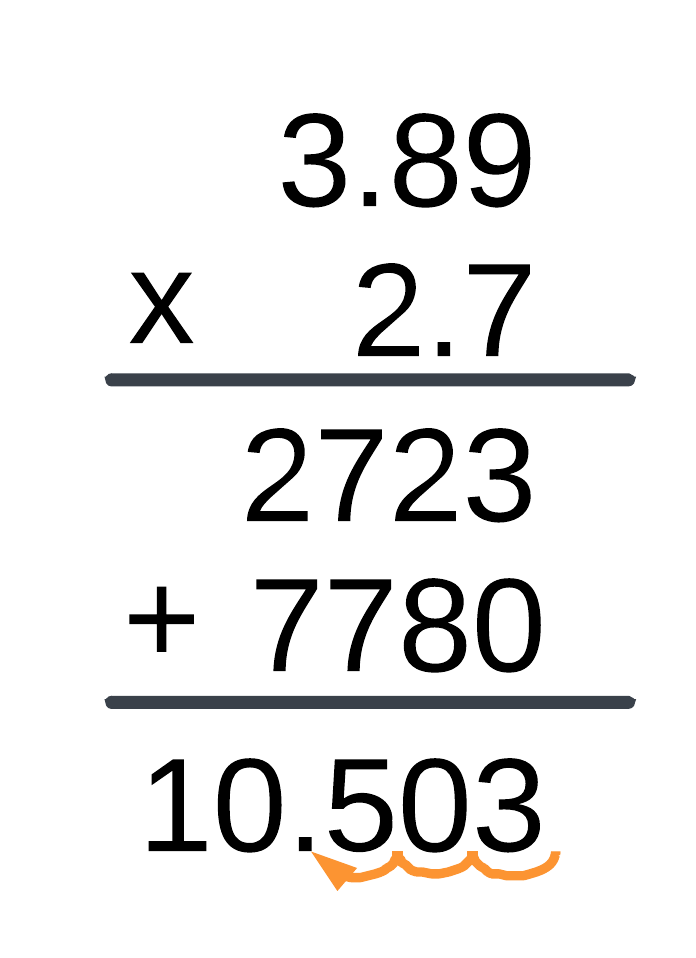
The equation shows 3.89 x 2.7 = 2723 + 7780 = 10.503, with an arrow that points from the space to the right of the number 3 in the result of the entire equation, the arrow skips 3 points and points at the dot in between 0 and 5.

Figura 6


Lembre-se

  • O passo decimal na multiplicação: Conte as casas decimais nos números originais e defina o decimal com o mesmo número de casas a mais na resposta.

Problemas Práticos

Analise as seguintes expressões::
  1. \(6.9 × 5 = ?\) (
    Solução
    x


    Solução: 34.5
    Detalhes:
    O 6 está na posição das unidades e o 9 na posição dos décimos. O número cinco também está na posição das unidades.


    Multiplique 5 por 9. A resposta é 45. Coloque o 5 na extrema direita abaixo da linha. Coloque o 4 acima do 6 na posição das unidades.
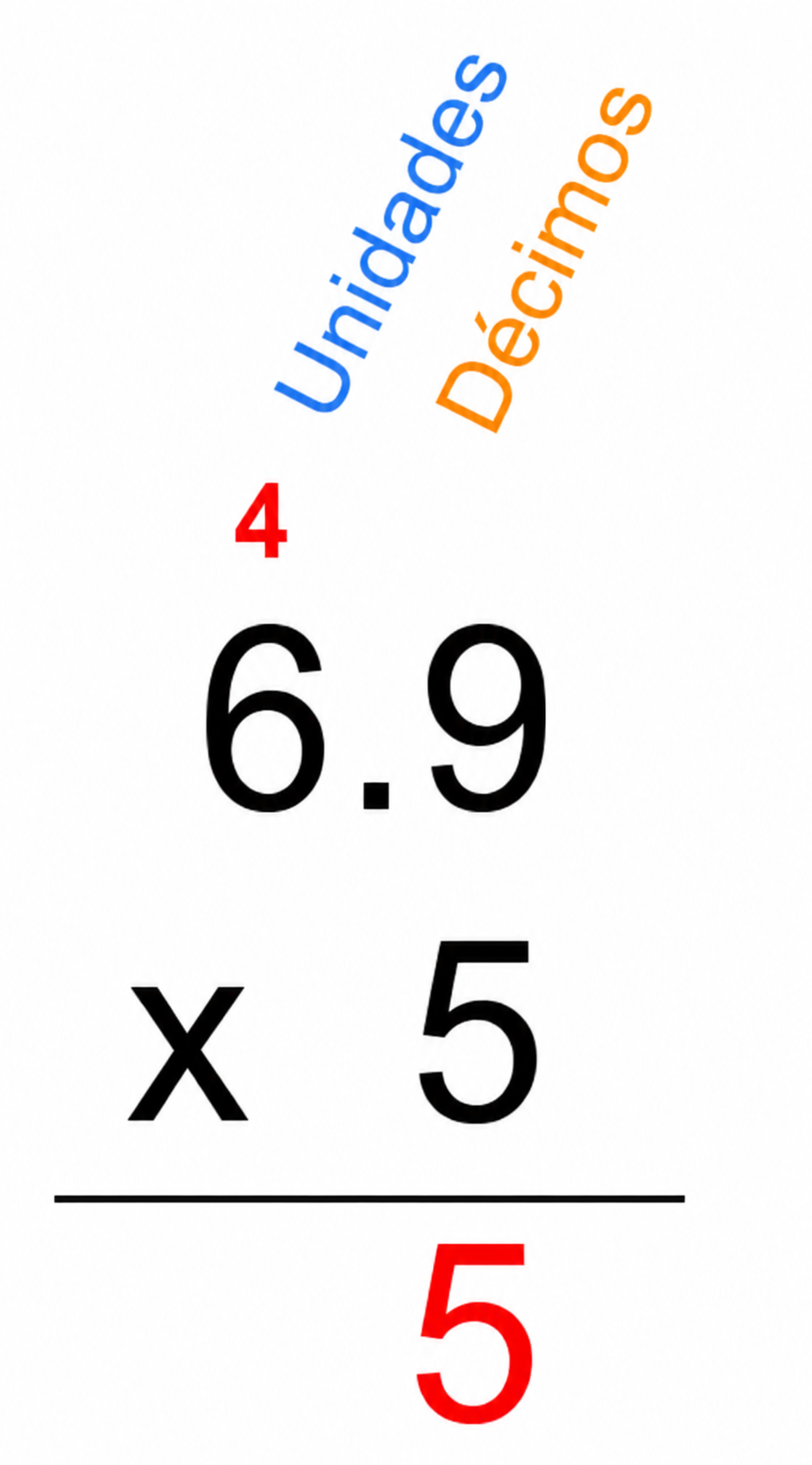


    O último passo é colocar um ponto decimal na resposta. Para determinar onde colocar o ponto decimal, considere as casas decimais nos fatores (os números sendo multiplicados entre si). Existe apenas uma casa decimal, .9 ou 9 décimos.


    A resposta terá uma casa decimal.


    Por fim, coloque o ponto decimal à esquerda do número 5, uma casa decimal acima na resposta.


    A resposta é 34.5.

    )
  2. \(3.8 × 90 = ?\) (
    Solução
    x
    Solução:
    342
    )
  3. \(4.9 × 1.2 = ?\) (
    Solução em Vídeo
    x
    Solução: 5.88
    Detalhes:

    | Transcrição)
  4. \(9.3 × 625 = ?\) (
    Solução em Vídeo
    x
    Solução: 5812.5
    Detalhes:

    | Transcrição)
  5. \(5.5 × 8.63 = ?\) (
    Solução
    x
    Solução: 47.465
    Detalhes:
    Coloque o número com mais dígitos em cima. O número 8.63 tem mais dígitos que 5.5, então coloque 8.63 em cima.
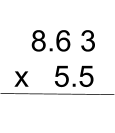
    There are two numbers stacked one on top of the other. The top number is 8.63. Under it is the number 5.5. The 5 in the tenths place is directly under the 3 and the 5 in the ones place is directly under the 6. There is a solid horizontal line below the 5.5 stretching the width of all then numbers and there is an x to the left indicating multiplication.

    Comece multiplicando os números à direita \(5 × 3\).
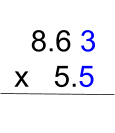
    This is the same as the previous image except the 3 and the 5 in the far right column of numbers are a different color indicating that we are working with them.

    Multiplique \(5 × 3 = 15\). Coloque o 5 no canto inferior direito e coloque o 1 sobre o 6. Isso move o 1 para a casa dos décimos.
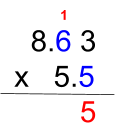
    This is the same as the previous image except below the rightmost column, under the horizontal line, is a 5. Above the 6 is a 1. Also, this time the 6 in the top number and the 5 in the rightmost column are blue indicating we will work with them next.

    Multiplique o 5 na primeira coluna da direita pelo 6. \(5 × 6 = 30\), mais o 1 que foi levado da multiplicação anterior, para um total de 31. Coloque o 1 na parte inferior, à esquerda do 5, e coloque o 3 sobre o 8. Isso move o 3 para a posição das unidades.
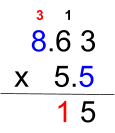
    This is the same as the previous image except now there is a 1 below the horizontal line and under the middle column of numbers. There is also a 3 above the 8 in the top number. The rightmost 5 and the number 8 are highlighted as the numbers to work with next.

    Multiplique \(8 × 5 = 40\), mais o 3 transferido da resposta anterior, o que resulta em 43. Desta vez, coloque o 43 abaixo da linha com o 4 ao lado do 3 porque não há mais colunas para multiplicar.
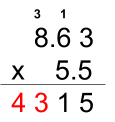
    This image is the same as the previous one except that below the horizontal line there is a 3 to the left of the 1 and a number 4 to the left of the 3. This makes the number below the horizontal line four-three-one-five reading it from left to right.

    Agora multiplique os outros 5 do problema por todos os números da primeira linha. Antes de multiplicar, coloque um 0 abaixo da primeira coluna à direita, abaixo do 5, como um espaço reservado.
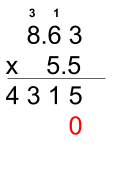
    This image is the same as the previous image except now there is a 0 below the 5 in the previous solution.

    Multiplique 3 por 5 na posição das unidades.
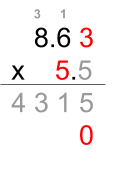
    This image is the same as the previous one except this time the 3 in the original top number and the 5 in the middle column below it are highlighted to show we are working with them next.

    Multiplique \(3 × 5 = 15\). Coloque o 5 à esquerda do 0 e coloque o 1 sobre o 6. Isso move o 1 para a casa dos décimos.
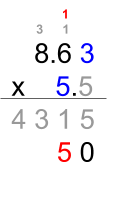
    This image is the same as the previous one except now there is a 5 to the left of the 0 in the bottom level of solutions. There is also a new number 1 above the 6 in the middle column.

    Multiplique \(5 × 6 = 30\) e some o 1 transferido da multiplicação anterior para chegar a 31. Coloque o 1 na parte inferior, à esquerda do 5, e coloque o 3 sobre o 8. Isso move o 3 para a posição das unidades.
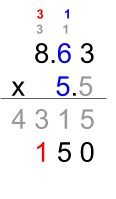
    This image is the same as the previous one except now the left 5 and the 6 from the original numbers are highlighted. Down in the solution area, in the bottom solution line there is a 1 to the left of the 5, directly below the 3 from the previous solution of 4315. There is also a new number 3 above the 8 in the leftmost column of the original numbers.

    Multiplique \(8 × 5 = 40\) e some o 3 transferido da resposta anterior para chegar a 43. Desta vez, coloque o 43 abaixo da linha com o 4 ao lado do 3.
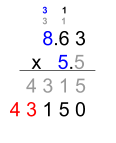
    This image is the same as the previous one except this time the leftmost 5 and the 8 of the original numbers are highlighted. Down in the bottom line of the solution area there is a 3 to the left of the 1 and a 4 to the left of this 3. This makes the bottom solution number four-three-one-five-zero.

    Some as respostas da multiplicação de 8.63 vezes .5 (décimos) e 8.63 vezes 5 (unidades).
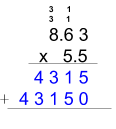
    This image is the same as the previous image except now there is a new horizontal line below the two solution lines of numbers. There is also an addition symbol to the left of the solution area and the numbers in the two solutions lines are a different color than the other numbers indicating we will be adding the two solution numbers together and putting our answer below the new horizontal line.

    Some os produtos (respostas da multiplicação). A soma dá 47465.
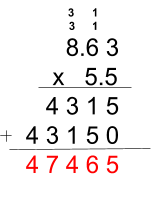
    This image is the same as the previous image except all the previous numbers are in black and there are numbers below the addition line. These numbers are four-seven-four-six-five going from left to right.

    Para colocar o ponto decimal, determine quantas casas decimais existem nos fatores. Neste exemplo, há três casas decimais nos números usados para multiplicação, então conte três casas na resposta. Comece do lado esquerdo e vá para a direita.
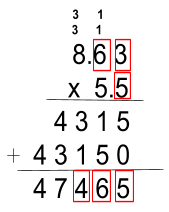
    All the numbers in this image are the same as the previous image except they are all the same color. In the original numbers 8.63 and 5.5, the numbers 6, 3 and the rightmost 5 have boxes around them because they are to the right of the decimal point. Down in the solution area, below the addition line the right three numbers 4, 6, and 5 are also in boxes. This shows that there were three digits to the right of the decimal point in the original numbers and so we are highlighting the three rightmost numbers in our final solution.

    Por fim, coloque o ponto decimal na resposta entre 7 e 4; isto é três lugares para a esquerda.
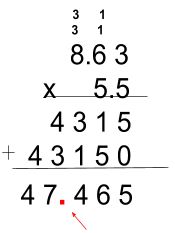
    This image contains all the same numbers as the previous image except now there aren’t any boxes and there is just a decimal point to the right of the 7 in the final solution. This makes the final solution forty-seven-point-four-six-five.

    A resposta é 47.465.
    )
  6. \(4.71 × 3.84 = ?\) (
    Solução
    x
    Solução:
    18.0864
    )